Stevia - (Stevia Rebaudiana)
|
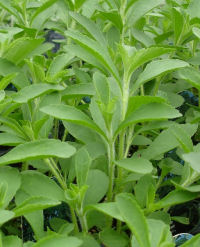
This perennial herb is also known as Sweet Leaf of Paraguay, Caa-he-é, Kaa jheé, Ca-a-jhei, Ca-a-yupi, Azucacaa, Eira-Caa, Capim Doce and Erva Doce. For hundreds of years, indigenous peoples in Brazil and Paraguay have used the leaves as a sweetener. Today it is used in Japan as a noncaloric sweetener, but has not been approved for this use in the United States by the FDA. It is said that when the leaf is processed, Stevia is 300 times sweeter than sugar, but unlike sugar, Stevia sweetens without calories. The leaves of the plant contain proteins, carbohydrates, iron, potassium, zinc, calcium, magnesium and vitamins A and C. In South America Stevia has been used to help with diabetes, because of its ability to lower the blood sugar level. That's because stevia does not elicit a glucose response in the body. Part used: Leaves. Some people have experienced a bitter aftertaste from some brands of Stevia. |
|